Oncology
5
min read
Colorectal Cancer Clinical Trials: Biomarkers, Endpoints and Development Challenges
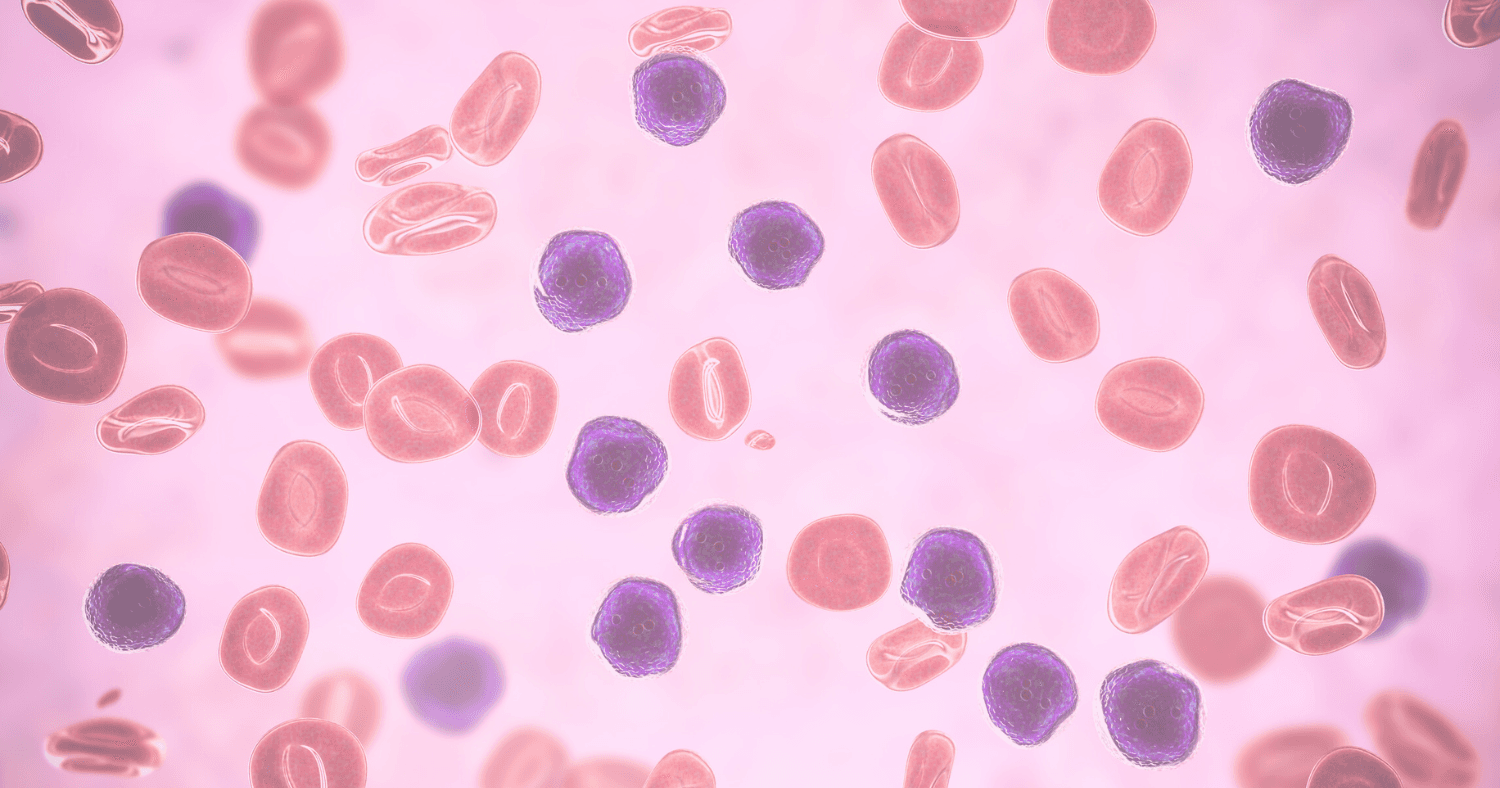
Colorectal cancer remains one of the most strategically important areas in oncology development. The disease burden is high, the treatment landscape continues to evolve, and the scientific questions are no longer limited to whether a therapy can shrink tumors or delay progression. In 2026, the field is increasingly shaped by biomarker-defined subgroups, ctDNA-guided decision-making, and a more explicit effort to match the right therapy to the right biological setting.
That evolution has changed how clinical trials are built. A colorectal cancer program today is much less likely to rely on broad, undifferentiated enrollment than it was even a few years ago. Instead, sponsors are being pushed toward more selective populations, more complex endpoint strategies, and more rigorous operational models—especially in metastatic disease, in the adjuvant setting, and in trials involving molecular diagnostics or companion biomarkers. For development teams, that means colorectal cancer is no longer just a high-volume oncology area. It is a precision-oncology environment with increasing design complexity.
Why Colorectal Cancer Remains a Strategic Area in Clinical Research
CRC sits at the crossroads of scale and complexity. It is common enough to sustain a broad clinical research market, yet biologically diverse enough to require increasingly tailored development strategies. Sponsors are not working in a single therapeutic lane. They are navigating MSI-H and MSS disease, RAS- and BRAF-driven subgroups, HER2-directed opportunities, adjuvant de-escalation questions, and a rapidly expanding role for circulating biomarkers.
That makes colorectal cancer attractive, but also demanding. There is room for innovation, especially in molecularly selected populations and earlier-stage disease. But there is also much less tolerance for generic trial design. Programs that ignore disease stage, biomarker architecture, or endpoint maturity now risk producing evidence that is technically complete yet strategically weak.
How Colorectal Cancer Clinical Trials Are Structured Across Disease Stages
One of the first things CRC development teaches sponsors is that “colorectal cancer” is not a single trial environment. Study design changes materially depending on whether the disease is localized, resected but high-risk, or metastatic. The therapeutic objectives shift. So do the endpoints, expected event rates, and timelines for decision-making.
This stage dependence matters because the same biomarker or therapy may behave very differently depending on where in the disease course it is being studied. That is why strong CRC development programs are almost always built around stage-specific logic rather than one broad clinical framework.
Early-stage and adjuvant trial settings
In localized and adjuvant settings, the core clinical question is often recurrence risk rather than immediate tumor shrinkage. Disease-free survival, recurrence-free survival, and increasingly ctDNA status are central to trial design. Here, sponsors are trying to answer whether postoperative treatment is necessary, whether it can be shortened, or whether escalation should be reserved for molecularly higher-risk patients.
This is where ctDNA has become especially influential. Instead of relying solely on histopathology and conventional staging, trials are increasingly exploring whether molecular residual disease can guide adjuvant therapy decisions with more precision. That is not just a biomarker story; it is a redesign of the treatment-decision framework itself.
Metastatic colorectal cancer trial design
Metastatic CRC trials are more crowded, more molecularly stratified, and often more commercially consequential. In this setting, sponsors are balancing multiple objectives at once: survival benefit, progression control, targeted sequencing, biomarker selection, and—more recently—treatment differentiation within increasingly narrow molecular niches.
The challenge is that mCRC no longer behaves like one population. MSI-H disease has opened the door to immunotherapy-driven programs, BRAF V600E has become a meaningful targeted niche, and RAS, HER2, and other molecular features continue to shape treatment logic. Trial design in this space is no longer only about line of therapy. It is about molecular context.
Why stage-specific strategy matters in CRC development
What works in metastatic disease may have limited relevance in the adjuvant setting, and vice versa. Endpoints mature differently. Biomarker meaning changes. Regulatory pathways shift with stage and intended claim. A sponsor that treats early-stage and metastatic CRC as structurally similar risks misaligning both the science and the operational model.
That is why stage-specific strategy is not just a planning detail. In CRC development, it often determines whether the evidence generated is truly actionable.
Biomarker-Driven Development in Colorectal Cancer
If one theme defines modern CRC research, it is biomarker stratification. Molecular testing is no longer a refinement layered onto trial design after the fact. It is increasingly one of the main drivers of eligibility, treatment logic, and endpoint interpretation. In some subgroups, it is the development strategy.
This is especially true as the field shifts deeper into precision oncology. Sponsors are no longer asking only whether a therapy works in colorectal cancer broadly. They are asking in which subtype, under what molecular conditions, and with what companion diagnostic framework the therapy can produce a meaningful signal.
MSI-H / dMMR and immunotherapy-driven trials
MSI-H / dMMR CRC has become one of the clearest examples of biomarker-led success in gastrointestinal oncology. Checkpoint inhibition has transformed expectations in this subgroup, particularly in metastatic disease, and has also pushed interest into earlier-stage settings. At the same time, the contrast with MSS disease remains striking, which has made molecular selection even more critical in immunotherapy trial design.
For sponsors, MSI-H is no longer just a predictive biomarker. It is a development-defining framework. It affects comparator choice, endpoint interpretation, and the plausibility of long-duration benefit.
RAS, BRAF and targeted therapy programs
RAS and BRAF status continue to shape the metastatic CRC landscape. BRAF V600E programs in particular have become more active, with newer combinations changing first-line and later-line development expectations. At the same time, RAS status remains essential for anti-EGFR strategy and broader therapeutic sequencing.
This is one of the clearest areas where biomarker strategy directly affects commercial viability. A trial may be scientifically valid, but if the molecular targeting logic is not sharp enough, the program may still struggle to differentiate itself in practice.
ctDNA and minimal residual disease strategies
ctDNA is increasingly influencing how CRC studies are designed—particularly in resected and adjuvant disease. The logic is appealing: if molecular residual disease can identify patients at highest risk of recurrence, then treatment can potentially be escalated or de-escalated with greater precision. Studies in stage II and III disease continue to strengthen the case for ctDNA as a prognostic and potentially decision-shaping biomarker.
Whether ctDNA ultimately becomes a broadly accepted surrogate in regulatory pathways is still an open question. But its influence on trial design is already real.
What Endpoints Matter Most in Colorectal Cancer Trials
CRC trials still rely on classic oncology outcomes—overall survival, progression-free survival, objective response, disease-free survival. Those measures remain central because they are clinically meaningful and regulator-facing. But endpoint strategy in colorectal cancer is becoming more layered, especially as molecularly selected populations and ctDNA-driven designs become more common.
The endpoint question is now less about choosing the “right” metric in the abstract and more about choosing the right metric for a particular stage, biology, and regulatory objective.
Overall survival and progression-free survival
OS and PFS remain essential in metastatic CRC. They are widely used, well understood, and still central to high-stakes regulatory and payer discussions. But they also come with familiar limitations: long follow-up, treatment crossover effects, and increasing complexity as later-line options expand.
In competitive settings, PFS may provide earlier readout value, while OS still carries decisive interpretive weight. Sponsors usually need to think in terms of both.
Pathological response and disease-free survival
In early-stage or perioperative settings, DFS and pathological response measures become more relevant. These endpoints are particularly useful when the development goal is recurrence reduction, surgical optimization, or adjuvant decision support rather than immediate survival benefit. They are also often more feasible than OS in trial timelines that cannot wait years for maturity.
That said, the choice of DFS or pathological response is not purely logistical. It also affects how convincing the final evidence looks once the study reads out.
ctDNA clearance and emerging surrogate endpoints
ctDNA clearance is one of the most closely watched emerging endpoints in CRC research. It offers an appealing bridge between biology and clinical risk, particularly in adjuvant disease, where recurrence may take time to declare itself. The regulatory future of ctDNA as a broadly accepted surrogate is still being defined, but it is already influencing development conversations.
For sponsors, the attraction is obvious: earlier signal, more targeted treatment logic, and potentially more efficient trials. But that promise still depends on validation, reproducibility, and context-specific interpretability.
Why CRC Trial Design Has Become More Complex
Trial design in CRC has become more difficult because the field has become more specific. Earlier development eras could rely more heavily on broad patient pools and more uniform comparator logic. That is no longer the case. Sponsors now have to account for disease stage, molecular subtype, prior therapy sequence, sidedness, biomarker assays, and increasingly the quality of tissue and liquid biopsy infrastructure supporting the study.
That complexity is not just scientific. It is operational. Every added biomarker requirement, every narrower cohort, and every longer endpoint horizon changes the study’s execution profile. The science may be more precise—but the trial is also harder to run well.
Emerging Trends in Colorectal Cancer Research
One of the clearest trends is the movement of molecular logic into earlier disease settings. Targeted therapy and immunotherapy are no longer confined to advanced disease discussions. Sponsors are increasingly asking how biomarker-guided treatment can alter recurrence risk, optimize adjuvant use, or identify patients who may not need intensification.
The second major trend is ctDNA-guided treatment strategy. Not every program is built around it, but its presence is growing. The third is that molecular classification itself is becoming more crowded. MSI-H and BRAF remain major anchors, but the field is still expanding around resistance biology, HER2, and other actionable niches. Together, these trends are pushing CRC further into a precision-development model.
Operational Challenges in Colorectal Cancer Clinical Trials
Operationally, CRC studies are under pressure from both complexity and competition. Biomarker-selected programs can suffer from low yield at screening. Tissue retrieval may be delayed or incomplete. Liquid biopsy logistics require timing discipline and assay consistency. And long-term follow-up remains a major commitment, especially in adjuvant studies where event maturity can take time.
There is also a coordination problem that sponsors know well. Molecular eligibility, companion diagnostics, endpoint governance, and multinational execution do not naturally align without strong infrastructure. CRC development increasingly depends on that alignment.
Why Sponsors Outsource Colorectal Cancer Clinical Trials
This is one reason sponsors often turn to specialized partners in CRC. The operational demands of biomarker-driven oncology studies are difficult to absorb casually, especially when global site support, diagnostics coordination, and endpoint maturity all matter at once. Outsourcing is often less about offloading work than about protecting trial integrity.
In CRC, specialized support can be valuable where the science and the operations intersect most tightly: central biomarker workflows, tissue and ctDNA logistics, oncology site quality, and the long-duration management of studies whose most important endpoints may take time to mature. In that setting, the right partner can improve more than efficiency. It can improve the quality of the evidence itself.
Better Biomarker Strategy Can Lead to Better CRC Trials
Colorectal cancer is no longer a development area where broad enrollment and standard endpoints are enough. Biomarker logic, stage-specific strategy, and increasingly sensitive molecular tools are changing how meaningful evidence is generated. That has made CRC trials more promising—but also more demanding.
For sponsors, the implication is straightforward. Better trial outcomes increasingly begin with better biomarker and endpoint strategy. The programs most likely to succeed are often those built not just around a strong molecule, but around the right population, the right evidence framework, and the operational discipline needed to make that framework hold.
👉 Contact our team today to discover how we can support your next study.